Field monitoring station

Agriculture and biodiversity · LITecS, C-MAST · Montanha Viva and BioD'Agro

One pole, a solar panel and whatever sensors the job needs. Scroll to climb it, from the anchor to the anemometer.

One pole

A station you can reconfigure

Weather, cameras and a microphone on one mast. Each module clamps on, so a new job means swapping a module, not redesigning the station.

Transport

Three sections, one small car

The mast is standard galvanised tube, cut into sections so the whole station fits in a light vehicle.

Anchor

Into the ground

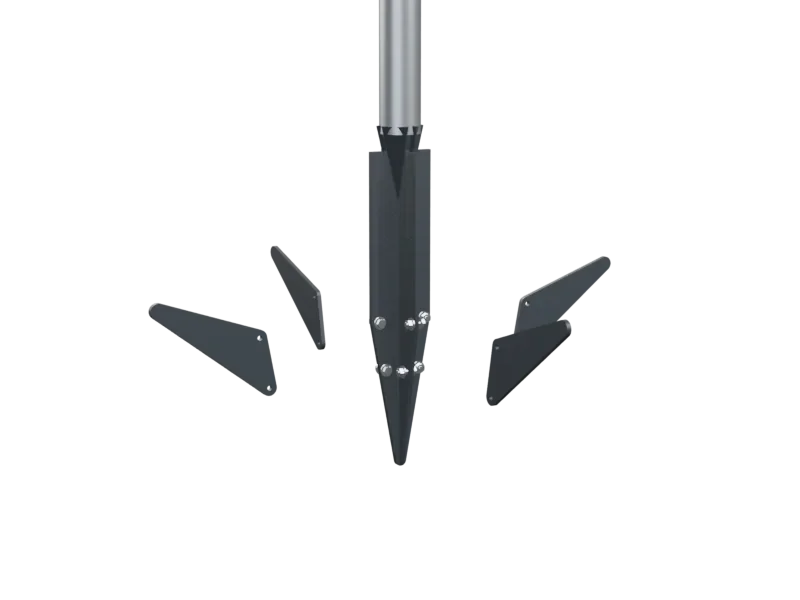
The anchor goes straight into the soil. On sandy or loose ground, four fins bolt on for extra grip. We built a tool to drive it in, too; it is not in this picture.

Joints

Clamps from flat plate

The tube sections join with clamps cut from 5 mm plate. Same plate, same cut, for every module on the pole.

Microphone

Listening for bats

An ultrasonic microphone. In BioD'Agro it recorded bats, to relate where they are to the insects they hunt.

Energy

The box that keeps it alive

Open the door: battery and charge controller, with room for local processing when a job needs it.

Weather

Temperature, humidity, pressure

The first part of the weather module, in a shielded tower.

Cameras

Two cameras, our own boxes

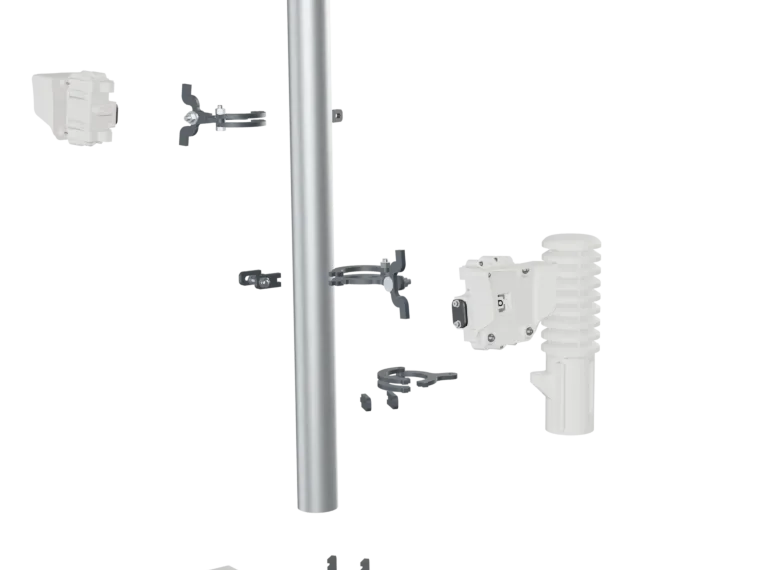
Open a housing and there is a Raspberry Pi Zero with its camera. The housings are 3D printed in a UV-resistant material and then painted.

Power

Solar panel

Enough to run off-grid all year. The microcontroller does the routine readings; the Raspberry Pi only wakes when it has real work to do.

Rain

Rain gauge

On its own bracket, cut from the same plate.

Wind

Speed and direction

Anemometer and wind vane, on top where nothing shelters them.

Made in-house

Almost all of it

Every bracket and clamp comes from a single 5 mm sheet, cut on a laser or on the university's waterjet. The tube is off the shelf.

Back up

Ready for the car

Keep scrolling for how it did in the field.

Team
LITecS, at C-MAST, UBI.
My part
All of the mechanical design and drawings. The team did the vision algorithms and helped build and assemble.
Materials
5 mm steel plate, laser or waterjet cut. Galvanised tube. UV-resistant printed housings, painted.
Projects
Montanha Viva (wild plants on the mountain) and BioD'Agro (vineyards and bats).

How it did outside

Three stations watched wild plants for a full year: 365 days and 1870 photos. They kept working through a wildfire.

In the vineyard, the microphone picked out bat calls (0.94 average precision) and told the species apart (0.85 mean average precision). Bats eat a lot of insects, so they are a useful sign of how healthy the vineyard is.

Two brains, one battery

An ESP32 handles the routine readings because it sips power. The Raspberry Pi wakes only for photos, processing and sending data, over LTE or LoRaWAN.

Paper: Interoperable IoT/WSN sensing station with edge AI-enabled multi-sensor integration for precision agriculture. Agriculture (MDPI), 2026. With Matilde Sousa, Ana Alves, Rodrigo Antunes, Pedro Dinis Gaspar and Nuno Pereira.
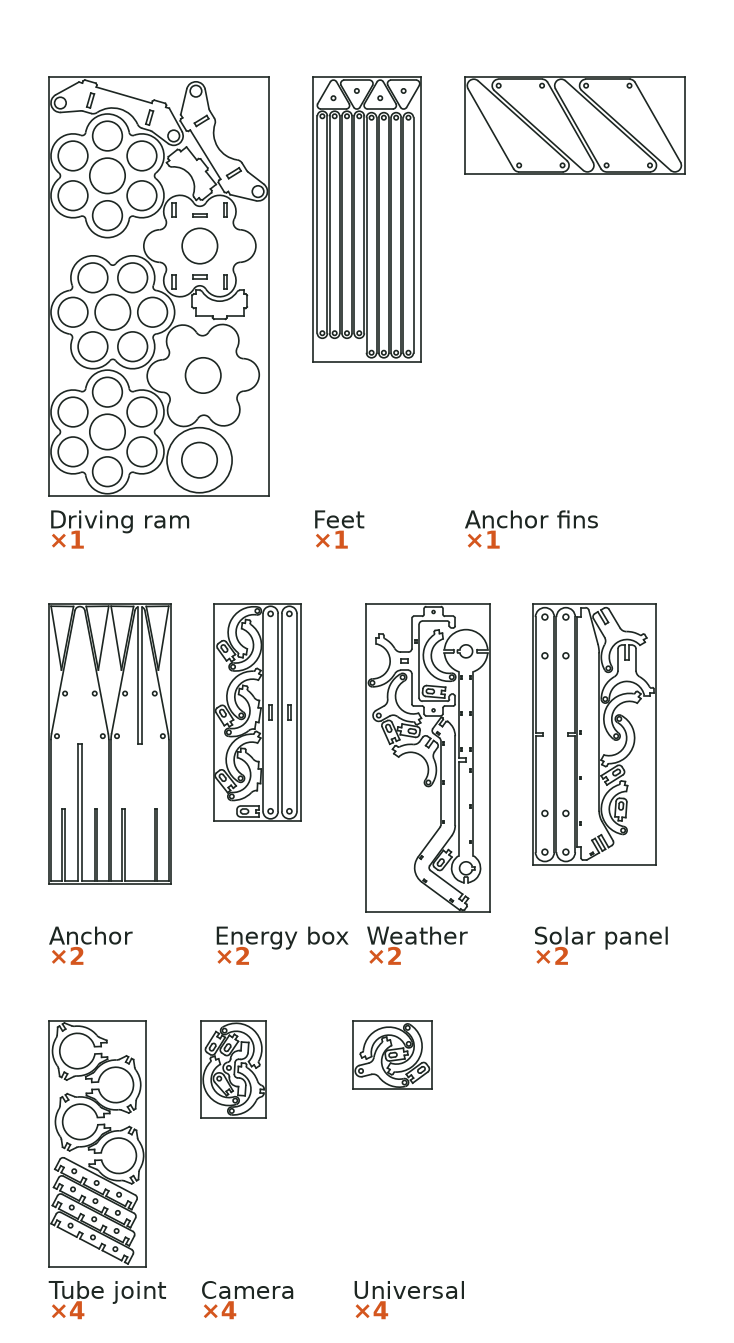
Cutting layouts for the station: driving ram, feet, anchor fins, anchor, clamps for the energy box, weather sensors, solar panel, tube joints and cameras, each marked with how many times to cut it
Every metal part of the station, flat. Ten layouts, cut once, twice or four times from 5 mm plate, on a laser or a waterjet. The driving ram is the tool that puts the anchor in the ground.
The anchor with its four fins pulled away, all cut from 5 mm plate
The anchor and its four optional fins.
Camera housings and their clamps slid off the pole
Camera housings, printed and painted, with their clamps.
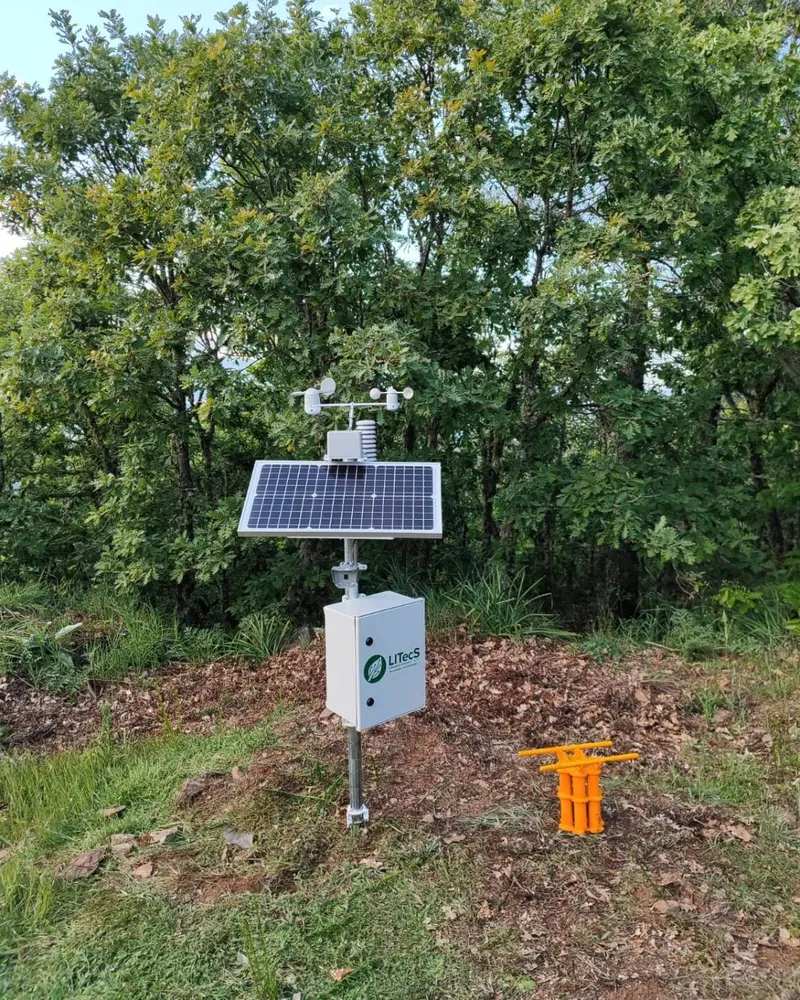
A finished station under oak trees, with the orange driving ram standing on the ground next to it
Installed. The orange thing is the driving ram, which puts the anchor in the ground.
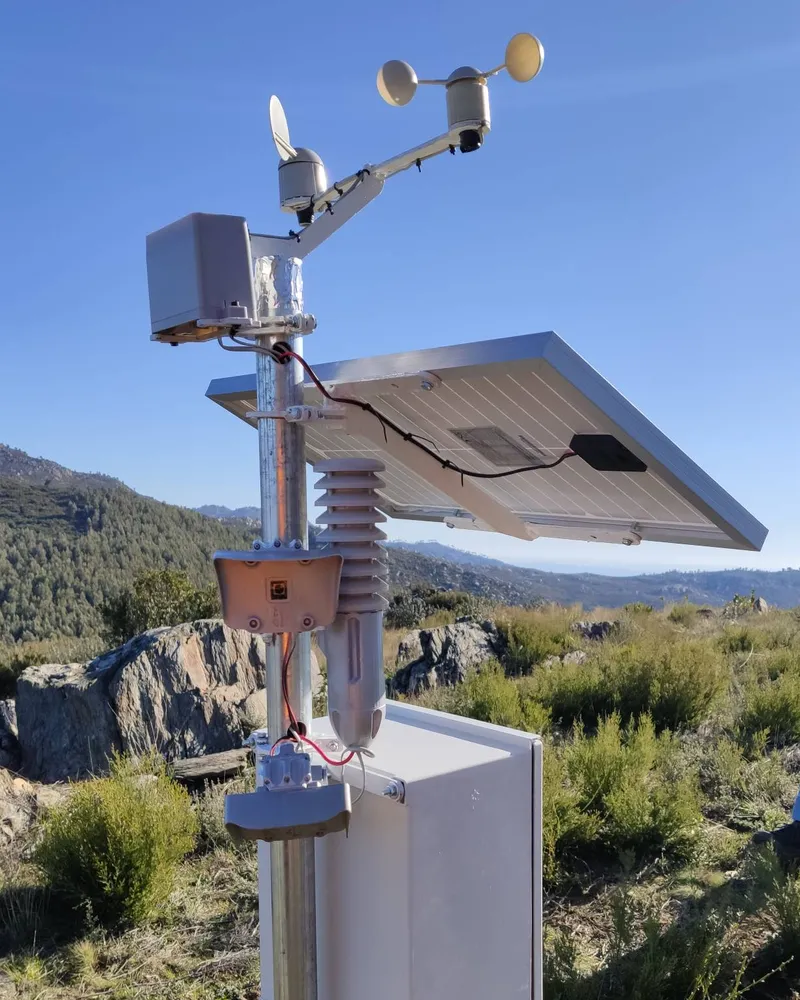
Close-up of a station on a mountain top: anemometer, wind vane, solar panel, weather shield, camera housing and energy box
On the mountain, all modules on.
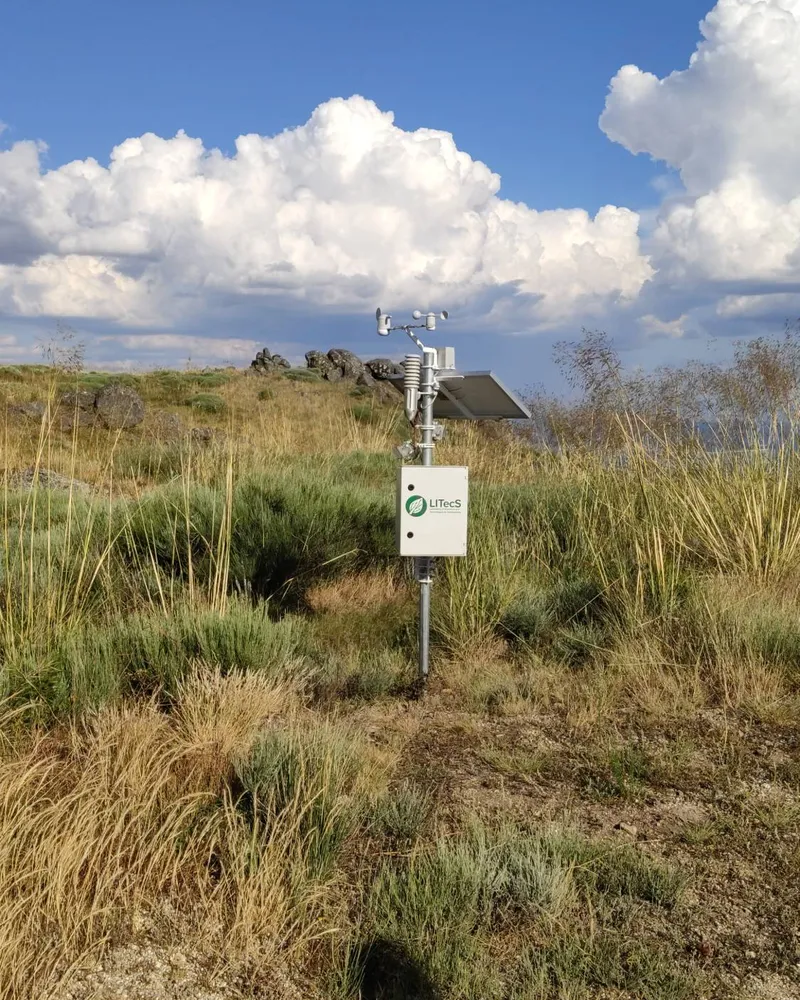
A station standing alone in tall dry grass under summer clouds
A year of this, and a wildfire.

Back to all work